
EPP Window Tint Exemption
 by Nida Hammad
Last updated:
Medically reviewed by:
Dr. Matthew Reynolds, MD


An EPP window tint exemption lets people with erythropoietic protoporphyria drive safely. EPP turns sunlight into severe pain. Standard car windows don’t block the light wavelengths that trigger attacks. You need darker tint than state laws normally allow. This guide shows you how to qualify for a medical window tint exemption for EPP. You’ll learn what medical documentation you need.
We cover state-by-state application processes. You’ll discover which tint specifications block harmful wavelengths. We show you how to mix window tinting with other EPP photosensitivity protection methods. The process takes planning, but it gives you back your ability to drive and travel. Let’s start with why EPP makes this exemption medically necessary.
EPP Window Tint Exemption: Why It’s Medically Necessary

EPP is a rare genetic disorder that affects how your body works. Without an EPP window tint exemption, driving becomes painful and risky. This condition affects roughly 1 in 75,000 to 1 in 200,000 people worldwide. It creates severe photosensitivity that goes far beyond typical sun sensitivity.
The disorder stems from a deficiency in the ferrochelatase enzyme. This enzyme normally helps process protoporphyrin IX in red blood cells. When it doesn’t work properly, protoporphyrin IX builds up to dangerous levels.
What Is Erythropoietic Protoporphyria?
EPP is one of several medical conditions that qualify for window tint exemptions based on documented photosensitivity. The condition results from inherited genetic mutations that disrupt normal blood cell function. Most EPP cases follow an autosomal recessive pattern. Both parents must carry the gene for this.
People with EPP experience excruciating pain within minutes of light exposure. The pain feels like burning from the inside out. Skin may swell, blister, or develop scarring after even brief exposure.
Unlike sunburn, EPP reactions happen immediately. There’s no delay between exposure and symptoms. This makes everyday activities like driving extremely challenging without proper protection.
The Science Behind EPP Photosensitivity
Red blood cells hold protoporphyrin IX. This compound takes in certain light waves. When light hits these molecules, they release energy that damages surrounding tissue. This process creates free radicals that destroy cell membranes and proteins.
The most problematic wavelengths fall between 400-410 nanometers. This range sits in the violet-blue part of the visible spectrum. Standard automotive glass blocks ultraviolet radiation but allows these harmful visible wavelengths to pass through freely.
This explains why people with EPP suffer even inside vehicles. Regular car windows offer no protection against the light that triggers their symptoms. Window tinting that blocks specific visible light wavelengths becomes medically necessary, not cosmetic.
How EPP Differs from Other Light-Sensitive Conditions
EPP stands apart from conditions like albinism and light sensitivity disorders in several ways. Most photosensitive conditions react primarily to ultraviolet radiation. EPP reacts to visible light that passes through standard UV-blocking glass.
The pain from EPP is immediate and severe. Other conditions cause discomfort or long-term damage. EPP causes acute agony within seconds. This makes prevention through window tinting absolutely critical for quality of life.
EPP also causes internal tissue damage that isn’t always visible externally. The protoporphyrin buildup can affect the liver and gallbladder over time. Minimizing light exposure through medical window tint exemptions helps reduce overall disease burden.
Medical Complications and Symptoms That Justify Tint Exemptions
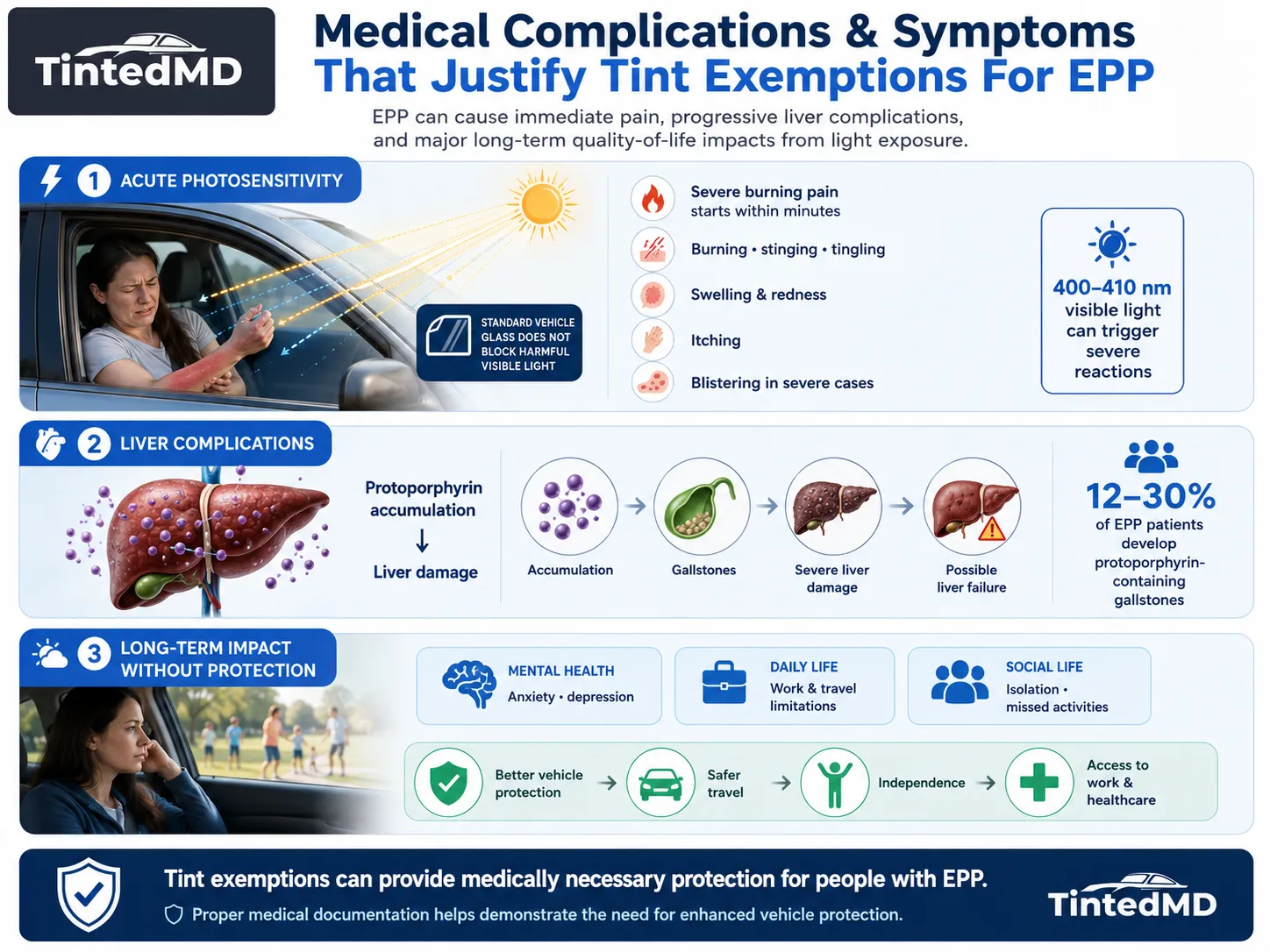
EPP creates severe medical complications that make window tint exemptions a health necessity. The condition causes health risks right away. It also causes health risks over time. Standard vehicle glass cannot stop these risks. Patients and physicians need to know the medical facts. This knowledge helps them document the need for better protection.
Acute Photosensitivity Reactions
Light exposure causes immediate, intense pain in EPP patients. Many describe the sensation as burning from the inside out. The pain starts within minutes of sun exposure and can last for hours or days.
According to the Porphyria Foundation, visible light wavelengths between 400-410 nm trigger severe reactions. These wavelengths pass through standard vehicle glass. Patients experience burning, stinging, and tingling sensations that intensify rapidly.
Physical symptoms develop quickly after the pain begins:
-
Swelling of exposed skin areas
-
Redness and inflammation
-
Itching that persists for days
-
Blistering in severe cases
Even brief car rides without proper window tinting can trigger reactions. The pain often prevents patients from driving or traveling as passengers. This limits work opportunities, medical appointments, and daily activities, medical science behind exemptions goes into more depth on this.
Liver Complications and Protoporphyrin Accumulation
EPP causes protoporphyrin to build up in the liver. This accumulation can lead to serious liver damage over time. The excess protoporphyrin forms deposits that interfere with normal liver function.
Gallstones containing protoporphyrin develop in 12-30% of EPP patients. These stones differ from typical gallstones and can cause pain and complications. Some patients need surgery to remove affected gallbladder tissue.
Severe cases can progress to liver failure. This happens when protoporphyrin levels become toxic to liver cells. Patients may need liver transplants in advanced stages. Reducing light exposure helps slow protoporphyrin production and protects liver health.
Long-Term Health Impacts Without Protection
Chronic light avoidance creates psychological and social challenges. Many EPP patients develop anxiety about sun exposure. Depression rates are higher among those who cannot participate in normal outdoor activities.
Social isolation becomes common when patients avoid daytime events. Work limitations reduce career options and income potential. Children with EPP miss school activities and struggle with peer relationships.
Quality of life suffers without adequate protection. Window tint exemptions allow patients to drive safely and maintain independence.
Tinted MD helps patients obtain the Medical Documentation needed for these exemptions. Proper vehicle protection lets patients work. It helps them get medical care. It lets them stay social.
Medical Qualification Requirements for EPP Window Tint Exemptions
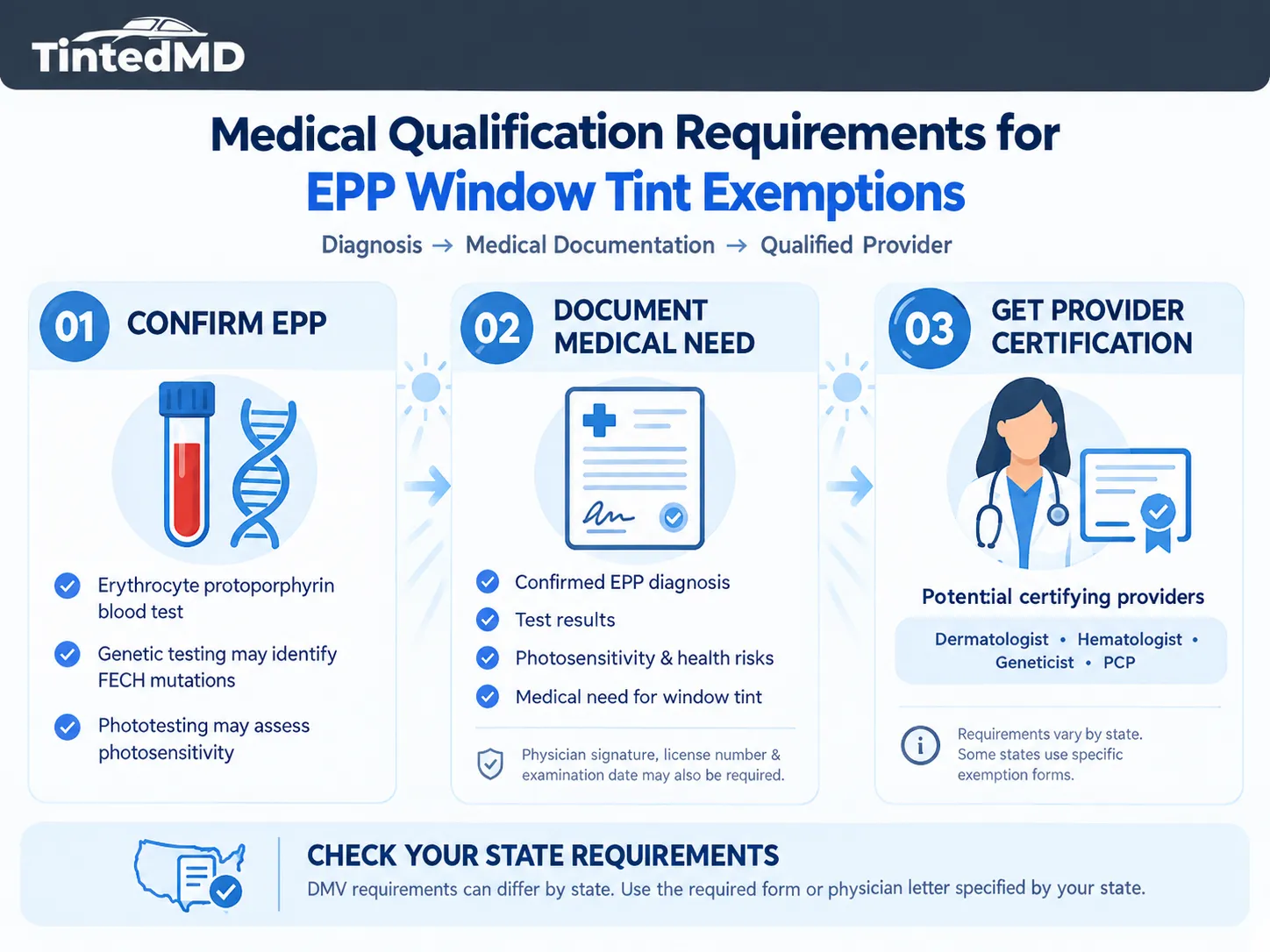
Getting a window tint exemption for EPP starts with proper medical documentation. You need a formal diagnosis confirmed by a licensed healthcare provider. This isn’t something you can self-diagnose or skip.
Diagnostic Criteria and Testing
EPP diagnosis requires specific blood tests. Doctors measure erythrocyte protoporphyrin levels in your red blood cells. Elevated levels above 200 μg/d L typically confirm the condition.
Genetic testing provides the most definitive diagnosis. Tests identify mutations in the FECH gene that cause EPP. According to diagnostic testing for protoporphyria, these genetic markers confirm the condition beyond doubt.
Some patients also undergo phototesting. This measures your skin’s reaction to specific light wavelengths. The test helps doctors understand your photosensitivity severity.
Required Medical Documentation
Your exemption application needs specific paperwork. The documentation must state your EPP diagnosis clearly. It should explain why window tinting is medically necessary for your protection.
Most states require a physician’s letter on official letterhead. The letter should include:
-
Your full EPP diagnosis with test results
-
Explanation of photosensitivity and health risks
-
Specific recommendation for window tinting
-
Physician’s license number and signature
-
Date of examination and diagnosis
Some states provide specific exemption forms. Your doctor completes these instead of writing a custom letter. Check your state’s DMV website for exact requirements.
Tinted MD connects patients with qualified providers who understand state-specific documentation needs. This streamlines the approval process and reduces paperwork delays.
Healthcare Providers Who Can Certify
Several types of doctors can certify your EPP diagnosis. Dermatologists often handle photosensitivity conditions. They understand skin damage risks and can document medical necessity clearly.
Hematologists specialize in blood disorders like EPP. They can provide detailed test results and genetic information. Geneticists also qualify since EPP involves FECH gene mutations.
Your primary care physician may certify if they’ve managed your EPP care. However, specialists typically provide stronger documentation. They have deeper expertise in rare conditions.
Online telemedicine platforms now offer convenient access to qualified providers. These services connect you with doctors experienced in photophobia treatment options and exemption requirements. Many patients find this faster than scheduling traditional appointments.
State-by-State Window Tint Laws and EPP Exemption Processes
Window tint laws vary widely across the United States. Each state sets its own rules for how dark your windows can be. These rules affect people with erythropoietic protoporphyria who need extra protection from light.
Standard Tinting Limits vs. Medical Exemptions
Most states set standard limits on window darkness. They measure this as visible light transmission, or VLT. Lower percentages mean darker tinting.
Standard limits typically require 35-50% VLT on front windows. That means at least 35-50% of light must pass through. Back windows often have similar rules, though some states allow darker tinting there.
Medical exemptions change these rules for people with EPP photosensitivity protection needs. Exemptions often allow 20-35% VLT or darker on front windows. This darker tinting blocks more light and UV rays. It helps protect sensitive skin from painful reactions.
The difference matters for EPP patients. Standard tinting might not block enough light. Medical exemptions let you install the protection you need.
States With Established Medical Exemption Programs
Many states recognize EPP and similar conditions that qualify for window tint exemptions in all 50 states. These programs make it easier to get approval.
According to medical exemption requirements by state, most states accept physician certification for photosensitive conditions. Some states have specific forms you must use. Others accept letters on official letterhead.
States with strong programs include:
-
California: accepts physician certificates for photosensitivity
-
Texas: requires signed statements from licensed physicians
-
Florida: recognizes sunlight-sensitive medical conditions
-
New York: provides exemptions with proper medical documentation
-
Illinois: allows exemptions for light-sensitive conditions
Each state has different requirements. Some issue permanent exemptions. Others require renewal every 1-5 years.
Application Procedures and Processing Times
The application process starts with your doctor. You need documentation that explains your EPP diagnosis. Your physician must certify that darker window tinting is medically necessary.
Most states require specific information:
-
Your diagnosis and medical condition
-
Physician’s license number and signature
-
Recommended VLT percentage
-
Statement of medical necessity
Processing times vary by state. Some states approve exemptions immediately at DMV offices. Others take 2-4 weeks to review applications. A few states need 4-6 weeks for processing.
After approval, you receive an exemption certificate. You must carry this certificate in your vehicle at all times. Law enforcement can request to see it during traffic stops.
Installation comes next. Choose a professional tinting company that understands medical exemptions. They’ll install film that meets your state’s approved specifications. Keep your exemption paperwork and installation receipts together.
The Complete Application Process for EPP Tint Exemptions
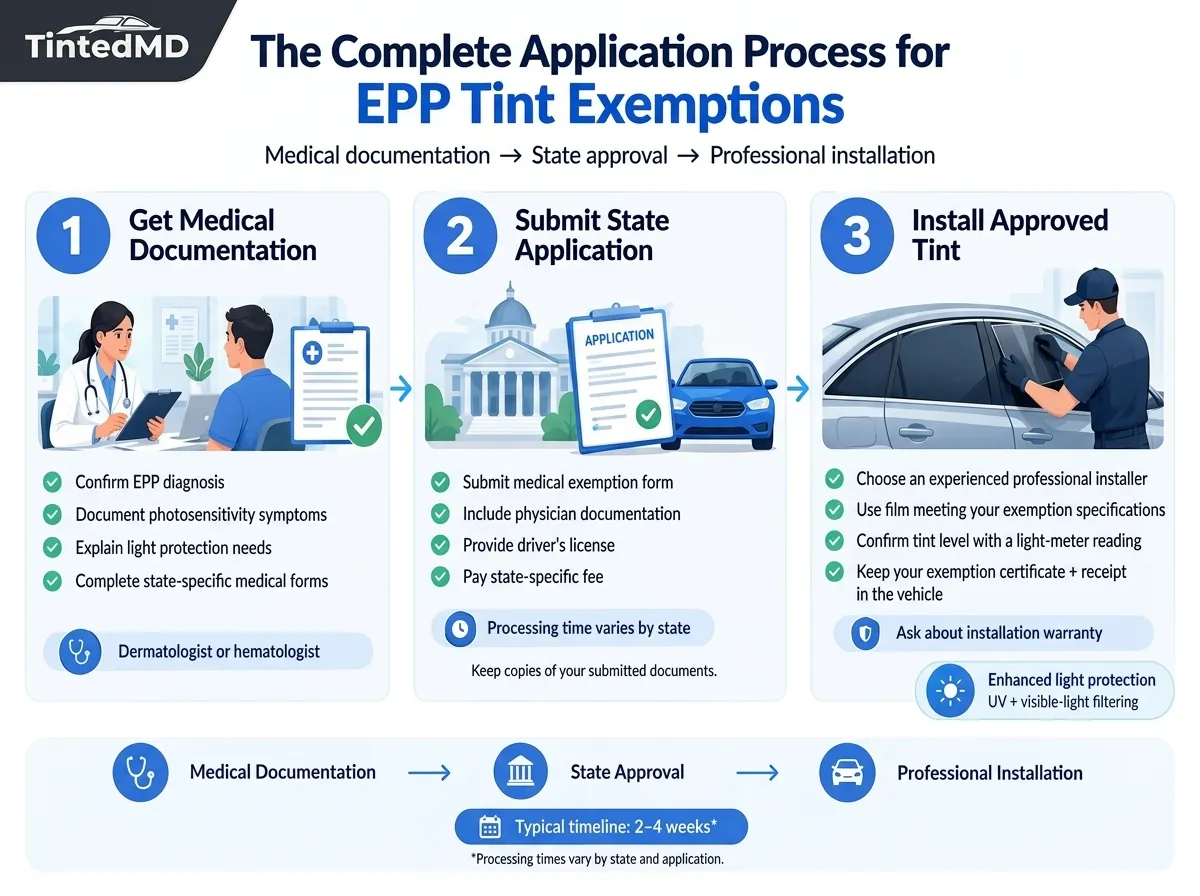
Getting an EPP window tint exemption involves three clear steps. Each step builds on the last. You need medical documentation, state approval, and professional installation.
The process takes time but protects your health. Most people complete it in 2-4 weeks. Online services can speed things up.
Step 1: Medical Consultation and Documentation
Start by scheduling a consultation with a dermatologist or hematologist. These specialists understand erythropoietic protoporphyria window tint needs. They can document your light sensitivity and UV protection requirements.
Many people now use telemedicine services for this step. These platforms connect you with licensed physicians who specialize in medical window tint exemption for EPP. They know exactly what documentation your state requires.
Your doctor needs to complete state-specific forms. The paperwork should include:
-
Your EPP diagnosis with medical records
-
Detailed explanation of photosensitivity symptoms
-
Specific light protection needs for driving
-
Recommendation for window tinting darkness level
-
Physician’s license number and signature
Some states accept a physician letter on office letterhead. Others require their own forms. Check your state’s requirements before the appointment.
Step 2: State Exemption Application Submission
Once you have medical documentation, submit your application. According to the New York DMV exemption process, most states require submission to the Department of Motor Vehicles. Some states process applications online.
The application typically includes:
-
Completed medical exemption form
-
Physician’s documentation of EPP diagnosis
-
Copy of your driver’s license
-
Processing fee (varies by state)
Processing times range from immediate to several weeks. Some states issue permanent exemptions. Others require renewal every 1-5 years.
Keep copies of everything you submit. You’ll need proof of exemption in your vehicle at all times.
Step 3: Professional Tinting Installation
After receiving your exemption certificate, choose a professional installer. Look for shops experienced with medical exemption specifications. They understand the exact requirements for EPP photosensitivity protection.
Select tinting film that blocks both UV and visible light wavelengths. EPP patients need protection beyond standard UV filtering. The film should block wavelengths between 400-700 nanometers.
Quality ceramic films work best for medical conditions requiring enhanced light protection because they reject heat without metal content. They also block 99% of UV radiation.
Verify the installation meets your exemption specifications. Request a light meter reading to confirm darkness levels. Keep your exemption certificate and installation receipt in the vehicle.
Most installers offer warranties on their work. Ask about coverage for peeling, bubbling, or fading. Proper installation should last 5-10 years.
Optimal Window Tinting Specifications for EPP Protection
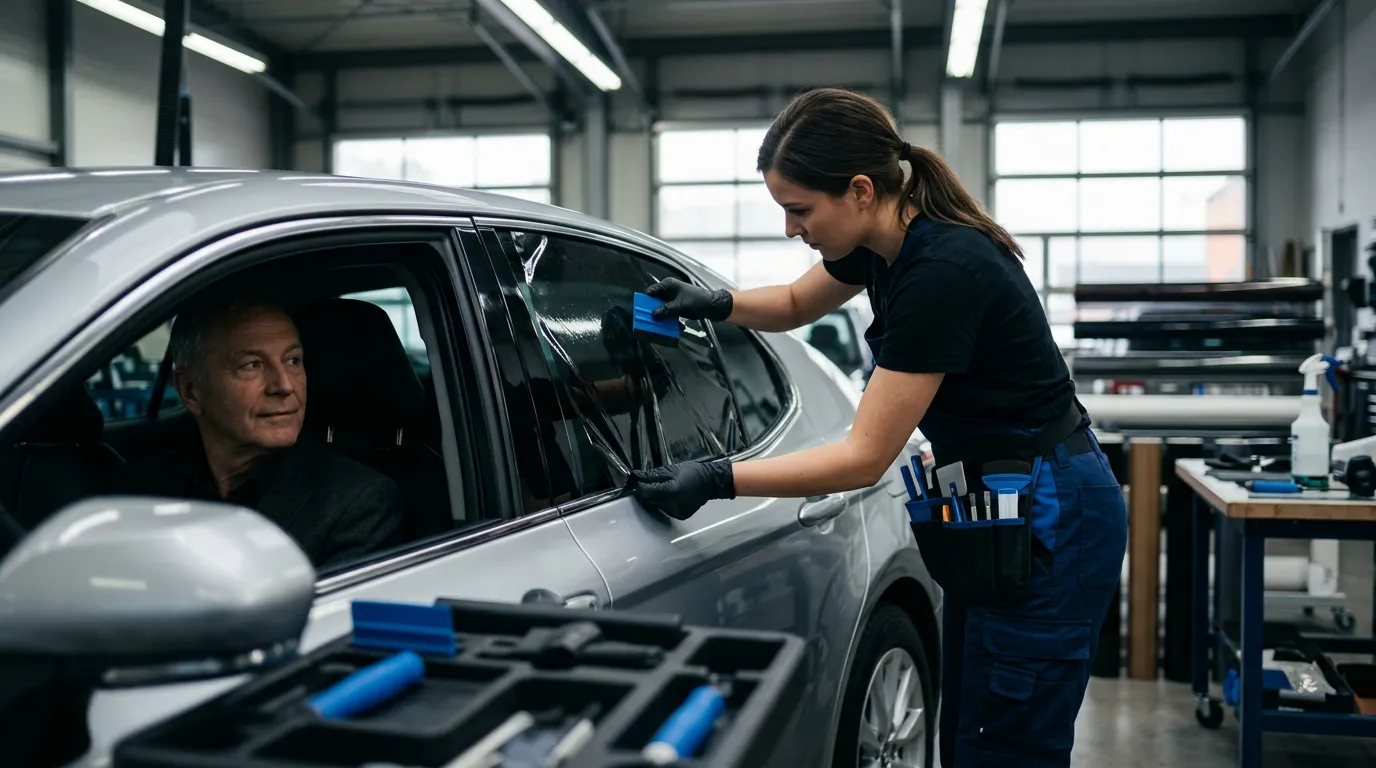
Choosing the right window tint specifications makes a real difference for EPP patients. The wrong tint won’t block the wavelengths that trigger symptoms. The right one provides relief and protection.
Visible Light Transmission Requirements
EPP patients do best with 15-35% VLT on front side windows. State exemptions allow this tint level in many places. This range blocks enough visible light to reduce discomfort. It still maintains adequate visibility for safe driving.
Lower VLT percentages mean darker tinting. A 20% VLT film blocks 80% of visible light. This level provides strong protection without compromising safety.
Most states need medical proof to install dark tint. The tint must be darker than 35% VLT. This rule applies to front windows. According to evidence-based consensus guidelines for EPP, patients need protection from specific light wavelengths that trigger protoporphyrin excitation. Your dermatologist can provide the necessary documentation for your exemption application.
Wavelength-Specific Filtering Technology
Not all window tints protect equally against EPP symptoms. Tinting must block 400-410nm wavelengths that trigger protoporphyrin excitation. Standard dyed films don’t provide this targeted protection.
Ceramic and nano-ceramic films offer superior wavelength-specific filtering. These advanced materials block harmful wavelengths while allowing beneficial light through. They also reject heat without using metal particles.
Key advantages of ceramic films include:
-
Precise wavelength blocking in the 400-410nm range
-
No signal interference with phones or GPS devices
-
Superior heat rejection compared to dyed films
-
Longer lifespan with minimal fading or discoloration
UV and Infrared Rejection Features
Quality window tinting provides multiple layers of protection. 99% UV blocking (both UVA and UVB) provides additional protection beyond visible light reduction. This comprehensive approach addresses all photosensitivity triggers.
Infrared rejection reduces heat buildup and improves comfort during vehicle travel. High-performance films can reject up to 90% of infrared radiation. This keeps your vehicle cooler without excessive air conditioning.
Neutral gray or charcoal tints provide the best balance of protection and visibility. These colors don’t distort your view of traffic signals or road conditions. Tips from the Lupus Foundation of America on managing photosensitive conditions daily emphasize combining multiple protective strategies for best results.
When choosing window tinting, look for films that clearly state their UV rejection, infrared rejection, and wavelength-specific blocking abilities. Your installer should provide detailed specifications showing exactly which wavelengths the film blocks.
Light Protection Strategy Beyond Window Tinting
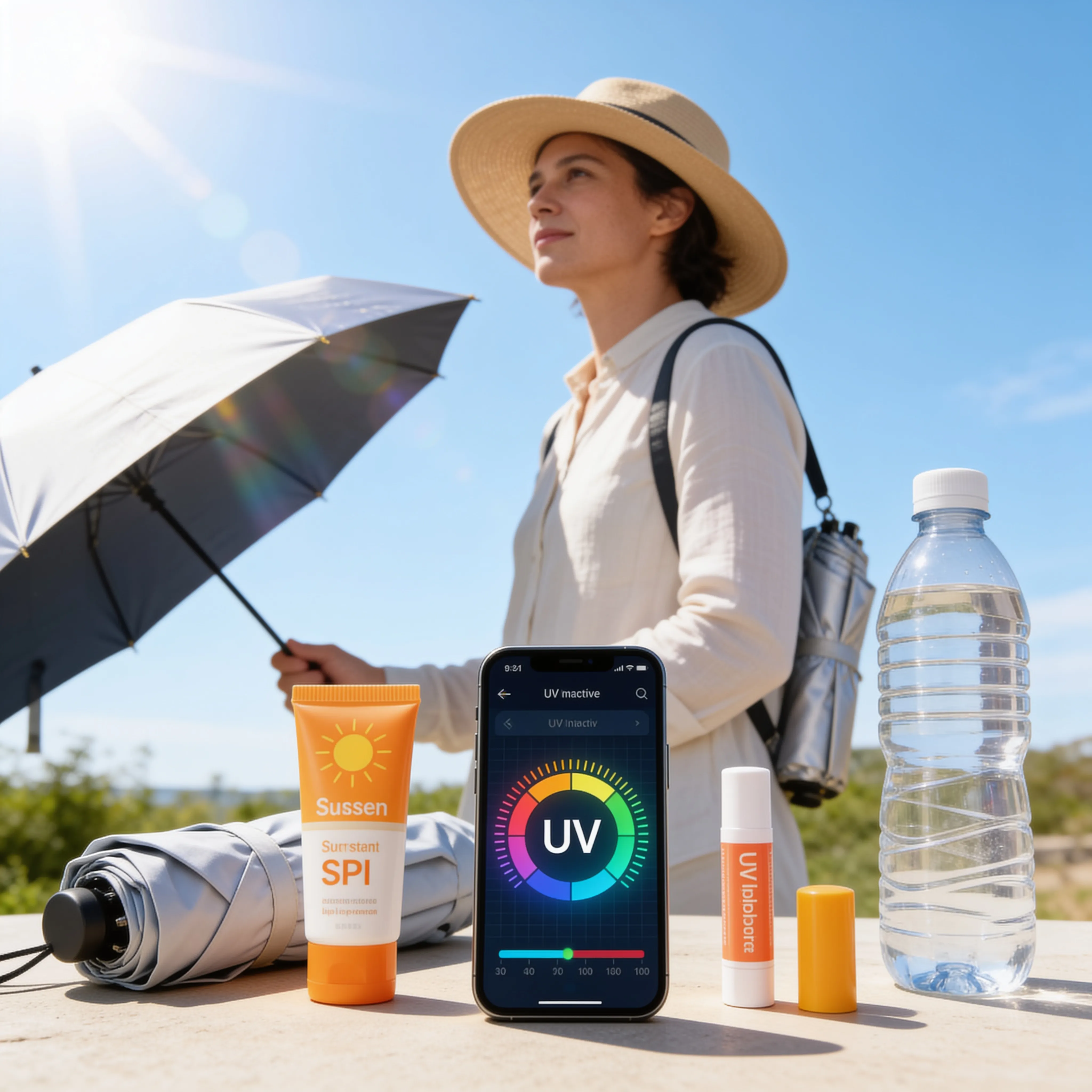
An EPP window tint exemption helps protect you while driving. But it’s just one part of a bigger plan. You need multiple layers of defense against light exposure. This approach reduces painful reactions and improves your quality of life.
Protective Clothing and Physical Barriers
Your first line of defense starts with what you wear. Long sleeves and pants block direct sunlight from reaching your skin. Wide-brimmed hats shield your face and neck from overhead rays.
Choose clothing with a UPF 50+ rating. Manufacturers design these fabrics for people with photosensitive conditions. They block more harmful light than regular clothes. UV-blocking sunglasses protect your eyes from painful glare.
Don’t stop at your car windows. Apply window films to your home and office windows too. This creates safe spaces where you can work and relax without worry. According to Medical News Today, protoporphyrin buildup in the skin causes severe pain when exposed to visible light.
Medication and Treatment Options
Beta-carotene supplements may offer modest protection for some patients. Talk to your doctor about whether this option makes sense for you. Results vary from person to person.
Afamelanotide (Scenesse) is an FDA-approved treatment. It increases melanin production in your skin. This helps your skin handle more light exposure. You receive it as an implant under the skin every few months.
Your doctor can explain if you’re a good candidate for this treatment. Not everyone qualifies. But for those who do, it can make a real difference in daily activities.
Lifestyle Modifications for EPP Management
Plan your day around light intensity. Schedule outdoor activities for early morning or evening hours. UV levels drop significantly during these times.
Check the UV index before heading out. High readings mean you should stay indoors or take extra precautions. Even cloudy days can trigger reactions in people with erythropoietic protoporphyria window tint needs.
Keep a symptom diary to track what triggers your reactions. This helps you identify patterns and avoid problem situations. Share this information with your healthcare team for better management strategies.
Living with EPP: Practical Tips for Daily Life and Travel
Managing erythropoietic protoporphyria requires careful planning beyond just window tinting. Your daily routines and travel plans need adjustments to protect against painful light exposure. These practical strategies help you maintain comfort and safety.
Vehicle Selection and Modifications
Choose vehicles with larger windows when shopping for a new car. This gives you more surface area to tint under your EPP window tint exemption. Larger windows also improve visibility while still blocking harmful light.
Consider adding UV-blocking windshield film where your state allows it. Some states permit clear UV film on windshields even with strict tinting laws. According to Texas window tinting standards, medical exemptions allow darker tinting on side windows while windshield options remain limited.
Install sun visors that extend beyond standard equipment. These provide extra shade during peak sun hours. Keep them accessible for quick deployment when driving conditions change.
Travel Planning and Accommodations
Plan your driving routes to minimize sun exposure during peak hours. Early morning or late evening travel reduces your risk of painful flare-ups. Use mapping apps to identify shaded routes with tree cover.
Research hotel accommodations before booking trips. Look for rooms with blackout curtains or request them specifically. Many hotels now list room features online, making it easier to find suitable options.
Carry your medical window tint exemption for EPP in all vehicles you use regularly. This includes rental cars and family members’ vehicles. Keep copies in your wallet and glove compartment for quick access during traffic stops.
Emergency Preparedness
Stock your vehicle with emergency supplies for unexpected EPP photosensitivity protection needs. Keep cooling packs in a small cooler to apply during sudden flare-ups. These provide immediate relief when you can’t escape sunlight.
Store pain medication in your car’s emergency kit. Include both prescription and over-the-counter options your doctor recommends. Check expiration dates monthly and replace as needed.
Connect with EPP support groups for practical advice from others managing this rare disease. Online communities share real-world tips about protoporphyria driving accommodations. They offer emotional support and problem-solving strategies you won’t find in medical literature alone.
Conclusion
EPP window tint exemptions offer real protection for people with erythropoietic protoporphyria. This rare genetic disorder makes standard vehicle glass insufficient. You need darker tinting to block visible light wavelengths that trigger painful reactions.
We covered how EPP creates medical complications that justify exemptions. You learned about qualification requirements and state-by-state laws. The application process involves three clear steps. Proper tint specifications matter for effective photosensitivity protection. Beyond window tinting, you need a complete light avoidance strategy for daily life.
Have EPP? Start your exemption process now. First, get medical paperwork from your doctor. Next, add window tinting that fits your state’s standards. You’ll be able to drive in comfort without stress.
Tinted MD simplifies the process of obtaining your EPP window tint exemption with Medical Window Tint Exemption for EPP services.
Take control of your condition and reclaim your mobility with the right accommodations.
Frequently Asked Questions
What is an EPP window tint exemption and why do people need it?
An EPP window tint exemption allows people with erythropoietic protoporphyria to use darker window tint than state laws normally permit. EPP causes severe pain when light hits the skin. Standard car windows block UV rays but let through violet-blue light wavelengths between 400-410 nanometers. These specific wavelengths trigger immediate, excruciating pain in people with EPP. Darker medical tint blocks these harmful wavelengths. Without this exemption, people with EPP can't drive safely or comfortably.
How does EPP cause pain that makes window tint medically necessary?
EPP stems from a deficiency in the ferrochelatase enzyme. This causes protoporphyrin IX to build up in red blood cells. When visible light hits these molecules, they release energy that damages surrounding tissue. The reaction creates free radicals that destroy cell membranes and proteins. Pain starts within seconds of exposure and feels like burning from inside out. Skin may swell, blister, or scar after brief exposure. This happens immediately, not hours later like sunburn.
What wavelengths of light trigger EPP symptoms in vehicles?
The most problematic wavelengths fall between 400-410 nanometers. This range sits in the violet-blue part of the visible light spectrum. Standard automotive glass blocks ultraviolet radiation but allows these harmful visible wavelengths to pass through freely. This explains why people with EPP suffer even inside vehicles with regular windows. UV-blocking glass doesn't protect against the specific light that triggers their symptoms. Medical window tint must block these visible light wavelengths to prevent attacks.
How rare is erythropoietic protoporphyria?
EPP affects roughly 1 in 75,000 to 1 in 200,000 people worldwide. This makes it a rare genetic metabolic disorder. Most cases follow an autosomal recessive pattern. This means both parents must carry the gene for a child to develop EPP. The condition results from inherited genetic mutations that disrupt normal blood cell function. Because it's so rare, many doctors and DMV officials may not be familiar with it when reviewing exemption applications.
How quickly do EPP symptoms appear after light exposure?
EPP reactions happen immediately after light exposure. There's no delay between exposure and symptoms. People with EPP experience excruciating pain within minutes or even seconds of light hitting their skin. This differs from sunburn, which develops hours after exposure. The immediate nature of EPP pain makes everyday activities like driving extremely challenging without proper protection. Quick onset also means people can't gradually build tolerance or adapt to light exposure over time.
Can EPP cause damage beyond skin pain?
Yes, EPP causes internal tissue damage that isn't always visible externally. The protoporphyrin buildup can affect the liver and gallbladder over time. This creates long-term health risks beyond the immediate pain from light exposure. Minimizing light exposure through medical window tint helps reduce disease burden. The condition affects roughly 1 in 75,000 to 1 in 200,000 people worldwide. Protecting against harmful light wavelengths prevents both acute pain and chronic organ damage.
Why don't regular UV-blocking car windows protect people with EPP?
Regular car windows block ultraviolet radiation but allow violet-blue visible light to pass through. EPP reacts to visible light wavelengths between 400-410 nanometers, not UV rays. Standard automotive glass offers no protection against the light that triggers EPP symptoms. This makes people with EPP vulnerable even inside vehicles with factory-tinted windows. They need specialized medical tint that blocks specific visible light wavelengths. Without this protection, driving becomes impossible due to immediate, severe pain.
How does EPP differ from other light-sensitive conditions that qualify for tint exemptions?
Most photosensitive conditions react primarily to ultraviolet radiation. EPP reacts to visible light that passes through standard UV-blocking glass. The pain from EPP is immediate and severe, starting within seconds. Other conditions may cause discomfort or long-term damage, but EPP creates acute agony right away. EPP also causes internal tissue damage to organs like the liver. This makes prevention through window tint absolutely necessary for quality of life, not just comfort.

Meet the author
Nida Hammad
I am a professional writer with over five years of experience creating clear, engaging, and well-researched content. I specialize in medical window tint exemptions and state compliance topics, helping readers understand tint laws and exemption requirements in simple, easy-to-follow language. Currently, I write for TintedMD, where I focus on producing accurate, trustworthy guides to help drivers navigate the medical tint exemption process with confidence.
Get Your Medical Tint Exemption Online in Minutes
Check Your Eligibility